
Commercial
10 Essential Tips for Creating a Functional Minimalist Office Design
November 14, 2024
In many of the top business regions in India, the topic of discussion around offices has moved away from the extent of physical space occupied by an organization to the performance of that physical space. With the advent of the hybrid work model, occupiers are looking at the workplace as a destination that earns the right to have employees working out of it. A study by Carleton University indicates that individuals spend nearly one-third of their time at work; hence, the office environment becomes extremely crucial in terms of efficiency and well-being. Minimalist office design is a key solution to such a scenario.
What is Minimalist Office Design?
Minimalist office design refers to a way of designing the workplace that eliminates excess, focusing on simplicity, functionality and aesthetics. This type of design features neutral colors, multifunctional furniture and clever storage as well as the use of natural light to ensure that employees feel relaxed and able to work efficiently. Minimalist office design is more than just a stylistic choice, it is an organized approach to designing the workplace where everything in it has a purpose.
Contrary to being a short-lived statement, minimalism is reflective of the realization by businesses that the workplace is a valuable asset and not merely an expense. In either the design of a new office or the redesign of an old one, a minimalist approach to furnishing, storage and color can meet the needs of the current workforce.
The Core Principles of Minimalist Office Design
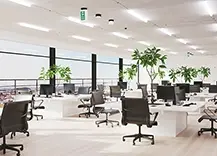
Minimalist interior designs are founded on simplicity. This range in Interior design, consists of a few items that have a simple geometric shape, a subdued color range including black, grey and brown colors, and wooden or other natural material furniture which creates a feeling of peace that lasts for a long time. The interior design includes an open layout and easy modification of the interior spaces with discreet partitioning and open spaces where movement, sharing of ideas and collaboration can take place freely.
Furniture is selected to be minimal, functional and beautiful. Multipurpose furniture items like desks with built-in shelves and seats are used to optimize space. There is no clutter because the items required for work are stored inside the wall and under-desk shelves. Minimalist interiors incorporate technology in such a way that it becomes discreet. Wireless gadgets are used, and cables are managed effectively.
How does minimalist office design improve productivity?
Office design influences the mood and energy of the people who use it every day, whether they register that influence consciously or not. Workplaces that encourage creativity, freedom and positivity give employees a genuine reason to come in, and the Steelcase Global Report has found that office spaces that enable creativity tend to attract the best talent. In a competitive market for skills, that connection between design and talent has become difficult for any organisation to overlook.
There are a number of reasons how minimalist design contributes to achieving this. Firstly, an uncluttered setting makes sure there is no distraction and concentration can be sustained. At the same time, a minimalist setting is conducive to maintaining clarity of mind out of which creativity springs. Getting rid of chaos and mess will enable individuals to perform their duties faster, while an orderly setting provides for a tranquil atmosphere that is conducive to reducing stress at work. This clarity will also help workers to plan their day and future activities more effectively.
What are the best minimalist office design ideas?
Businesses of every scale are increasingly aware of how design, both aesthetic and functional, shapes employee productivity and, ultimately, organisational performance. The following ten ideas offer a practical framework for creating a productive, efficient and visually refined workspace.
1. Declutter the Workspace
The first and most important task for creating a minimalist office is the process of decluttering, which involves clearing away items from the desks and common spaces and leaving only those things that will help to get the job done. The neatness of the office space not only looks better but works better too.
2. Multi-Purpose Furniture
Minimal office furniture should be designed to work hard, with desks that incorporate built-in storage, foldable tables and seating that doubles as storage. These are all examples of how functional pieces can simplify a space without sacrificing usability.
3. Optimise Natural Light
Just as much as natural light is aesthetically pleasing, it is also a practical necessity, and placing desks close to windows that have translucent blinds will ensure that there is plenty of light inside the workspace. This not only makes the office space look bigger but also eliminates the need for artificial lighting. There is a significant impact of lighting on productivity. Michigan State University has established the relationship between poor lighting and ventilation with low learning and memory performance, which emphasizes its importance in any workplace setting.
4. Create a Neutral Colour Palette
Whites, greys and beiges form a calm, neutral palette that makes spaces feel wider and more open. A restrained colour scheme preserves the clean visual character that defines minimalist design.
5. Use Smart Storage Solutions
Built-in shelving, concealed cabinets and under-desk storage maintain order while remaining unobtrusive in their presentation. These solutions sustain the clutter-free environment on which minimalist office design depends.
6. Incorporate Natural Elements
Materials like wood and stone along with indoor plants make the austerity created by minimalism less harsh and give warmth to the workplace environment. Plants have also been linked with good mood as well as air quality inside buildings. In a wider sense, features like vertical gardens and terrace gardens give people a connection with nature in all parts of the campus.
7. Technology Integration
Technology should remain sleek and discreet, with robust cable management keeping wired devices tidy. Modern, slim equipment helps the workspace stay organised, functional and visually uncluttered.
8. Keep Decor Simple
Minimalist decor follows the principle that less is more, with one or two statement pieces such as a considered artwork or a sculptural functional lamp providing character. This avoids the visual noise that excessive decoration introduces.
9. Open and Flexible Layout
Flexible and adaptable spatial configurations give a feeling of spaciousness and openness, and furniture which is easy to rearrange allows one to work individually or in a group, depending on the situation. Large volume is important not only horizontally but also vertically. It appears from design studies that people who work under an open ceiling are generally more positive about going to work, even in those spaces that have little daylight.
10. Sustainability
Minimalism and sustainability share a common logic of doing more with less, and the use of recycled furniture and energy-efficient technology contributes to office designs that are both simpler and more durable. When these interior choices are paired with a building designed around sustainability from the outset, the environmental and wellbeing benefits extend well beyond the fit-out.
Why the Base Building Matters
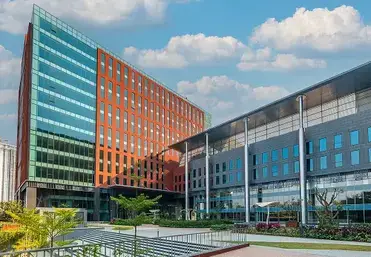
Most of the principles that go into successful minimalist designs are decided upon way before the first piece of furniture goes in. How much natural light there is, how good the air flow is, how spacious the floor and ceiling plate sizes are, and whether there are green elements such as vertical gardens and terrace landscapes are all based on the building. Picking the right office is thus not merely an issue of taste but a matter of how people will feel and function within this environment. For tenants considering Grade A offices, these base building characteristics define what is possible from any interior approach.
Embracing Minimalism in Office Design
Minimalist office design creates an environment in which efficiency, clarity and creativity can flourish. It removes unnecessary distractions and brings the essentials of good work into sharper focus. Minimal furniture, intelligent storage, abundant natural light and meaningful connections with nature together support both productivity and wellbeing, whether in a corporate headquarters or a hybrid team's collaboration hub.
It is a principle that Brigade Group has long recognised across its commercial portfolio, where Grade A developments in prime business locations across Bengaluru, Chennai, Hyderabad, Kochi and GIFT City are built with a strong focus on sustainability, wellness and occupier convenience. This reflects Brigade's conviction that thoughtful design, down to its simplest details, remains one of the most powerful drivers of employee happiness, productivity and creativity.
FAQs
1. How does a minimalist design impact employee productivity?
By reducing visual clutter and unnecessary stimuli, minimalist design helps employees stay focused, think clearly and work more efficiently.
2. What are the most important principles of minimalist office design?
The core principles of minimalist office spaces are simplicity, functionality, clean lines, neutral colours and smart storage solutions.
3. Can minimalist design help reduce operational costs?
By limiting unnecessary furniture, decor and equipment, minimalist design can help businesses reduce setup and maintenance costs over time.
4. What types of businesses benefit most from minimalist design?
Startups, technology companies, GCCs (Global Capability Centres), consultancies, distributed teams and creative practices often benefit most, as minimalist layouts support agility, focus and collaboration.
5. Why should businesses consider a minimalist office design?
Minimalist office design improves focus, reduces stress and enhances productivity by eliminating clutter and distractions. It also creates a clean, modern and professional environment that appeals to both clients and employees.
6. How does natural light influence employee productivity?
Well-lit, well-ventilated workplaces are associated with better concentration, mood and cognitive performance. This is why daylight access is one of the most valuable qualities an office building can offer.
Looking for Grade A Commercial Spaces Built for Long-Term Value?
Lease or invest in future-ready developments across Bengaluru, Chennai, Hyderabad, Kochi & GIFT City.
- Grade A commercial developments
- Prime business & IT hub locations
- Lease & investment opportunities
MUST READ




Looking for something specific?
We'd be delighted to help you.
