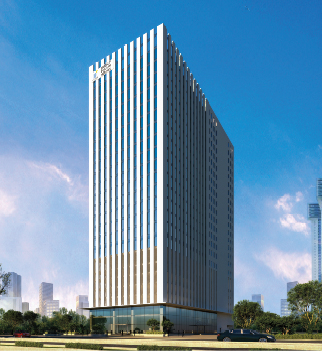
Commercial
Owning Commercial Office Space: Benefits, Considerations and Investment Potential
August 18, 2018
Office ownership starts with a straightforward idea: purchasing a commercial office space for business operations, long-term use, investment, potential rental income and asset creation. For CXOs, real estate heads, founders and institutional investors, though, the decision is rarely straightforward. It touches capital allocation, workplace strategy, employee access, brand presence and the ability of a property to stay useful as the business changes.
India’s office market has made that choice more strategic. In 2025, the country recorded 83.3 million sq. ft. of gross leasing and 57.0 million sq. ft. of net absorption, while vacancy declined to 15.2%, its lowest level in 5 years. Built-up office assets accounted for approximately 28% of India’s USD 14.3 billion real-estate investment inflows in 2025, placing office assets firmly within the institutional investment conversation.
For businesses evaluating Bengaluru, Hyderabad, Chennai and other growth corridors, commercial office space ownership now sits between operational stability and long-term planning. It can support continuity, create a balance-sheet asset and offer strategic flexibility, provided the location, documentation, ownership costs and building quality are examined with discipline.
What Is Office Ownership?
Office ownership refers to the purchase of an office unit, floor, building or legally defined commercial unit for business occupancy, investment ownership or long-term holding. Under Indian real estate law, an "apartment" can include an office, showroom, shop, godown or other commercial unit, while a building can include structures intended for commercial, business, professional or trade use.
That legal distinction matters. A company leasing office space receives usage rights for a fixed term, subject to the lease agreement. An owner holds a property interest, can occupy the premises for business use and may potentially lease the property when it is not fully occupied, subject to approvals, market demand and applicable regulations.
Put simply, owning an office is not just another way to sit in the same building. It changes the way a business thinks about its premises, its capital and its future flexibility.
Why Do Businesses Consider Owning Their Office Space?
Businesses usually consider commercial property ownership when they expect to remain in a location for many years and want greater control over their premises. A firm setting up a headquarters, regional office, Global Capability Centre (GCC) or long-term delivery centre may prefer ownership if the location aligns with talent access, client proximity, partner networks and future workforce planning.
Ownership can also convert part of a recurring occupancy requirement into a business asset rather than treating every rupee as an operating expense. That said, I’d be careful about treating buying as automatically better than leasing. It isn’t. Capital cost, financing, liquidity, maintenance obligations, tax treatment and the likely holding period all matter.
For growing companies, the more useful question is this: can the selected commercial property support stability today without becoming a constraint tomorrow? A business premises that works for the current team but leaves no practical room for expansion can become expensive in ways that don’t show up on the purchase price.
Key Benefits of Owning Commercial Office Space
Greater Control Over Your Workplace
One of the clearest benefits of owning office space is control. Owners can plan interior design, workplace configuration, branding, meeting zones, collaboration areas, technology rooms and long-term fit-outs with greater freedom, subject to building rules and statutory norms.
For businesses with specialised security requirements, client-facing areas or operational workflows, this control can be valuable. A financial services firm, GCC operator or technology enterprise may need secure zones, high-quality connectivity, controlled visitor movement or collaboration spaces designed around its own operating model. Ownership gives management more room to align workplace infrastructure with business needs rather than renegotiating every major change with a landlord.
Potential Long-Term Asset Creation
An owned commercial property becomes a business asset that may retain or increase in value over the holding period. The word "potential" matters here. Value depends on market conditions, micro-market demand, tenant profile, building quality and surrounding development.
A grade A commercial property in a well-connected business district will be read differently by occupiers and investors than an isolated asset with weak access, ageing systems or limited tenant appeal. In commercial real estate, the asset is never only the built structure. It is also the location, the operating ecosystem, the surrounding infrastructure and the quality of future demand.
Greater Flexibility for Business Expansion
Ownership may allow businesses to plan their workspace around operational needs rather than a landlord’s leasing cycle. A company may acquire space with future seating, leadership cabins, training rooms or additional functions in mind, provided the floor plate and building design allow practical reconfiguration.
This is where the design of the building matters as much as the size of the unit. Floor efficiency, column spacing, common-area planning, lift capacity and access control can decide whether a company can grow comfortably within an owned asset or whether it ends up redesigning around avoidable limitations.
Potential Rental Income
If the owner no longer requires the full premises, part or all of the asset may be offered as office space for rent to another occupier. This can create potential rental income, although income is never automatic.
Location, vacancy, lease terms, compliance, operating costs and occupier demand all affect whether the space can be let on acceptable terms. A well-located Commercial office space may attract interest more readily, but even there, owners need to account for downtime, fit-out expectations, maintenance terms and the quality of the tenant mix.
Potential Capital Appreciation
Capital appreciation in commercial real estate is influenced by location, infrastructure, demand, surrounding development and building quality. Historical office-rental appreciation across cities such as Bengaluru, Pune and Hyderabad shows how markets can move differently over time, which is why every asset needs to be assessed on its own merits.
This point is worth slowing down on. Capital appreciation is not a promise, and it should not be used as the only reason for buying commercial property. It is one possible outcome within a wider ownership thesis that should also consider usability, liquidity, documentation, building performance and the strength of the micro-market.
Greater Control Over Workplace Experience
Ownership can support a sharper workplace strategy. Businesses can align design, amenities, accessibility, branding and workplace infrastructure with employee experience.
In a market where Grade A demand is increasingly linked to sustainable, well-managed and future-ready buildings, workplace experience has moved beyond the facilities checklist. For GCCs, technology firms, financial services companies and fast-growing enterprises, the office is still a statement of how the organisation works. That makes Grade A office space more than a space-planning choice. It becomes part of talent strategy, client confidence and operational resilience.
Owning vs Leasing Office Space: What Should Businesses Consider?
The choice between ownership and leasing office space should be evaluated through capital planning, business location strategy and operating flexibility. A long-term occupier with stable headcount, strong confidence in a micro-market and the capital capacity to acquire property may view ownership very differently from a fast-scaling firm that needs frequent relocation or expansion options.
The table below offers a broad comparison. It should not be read as a universal answer, because lease terms, financing structures, tax treatment and local market conditions can materially alter the outcome.
| Factor | Owning Office Space | Leasing Office Space |
|---|---|---|
| Upfront capital | Generally higher | Generally lower |
| Control over property | Higher | Subject to lease terms |
| Long-term asset | Property ownership | No property ownership |
| Flexibility to relocate | Generally lower | Generally higher |
| Maintenance responsibility | Owner-dependent | Depends on lease terms |
| Long-term planning | Greater control | Depends on lease duration |
| Potential property appreciation | Owner may benefit | Does not accrue to tenant |
For many corporate occupiers, the right answer may be mixed. A business may own its headquarters or strategic delivery centre while leasing swing space in another city. It may buy in a mature micro-market and lease in an emerging corridor until the workforce plan becomes clearer. In my view, this is often the most practical way to think about office space ownership: let the business plan lead, then decide which properties deserve long-term capital.
What Should You Consider Before Buying an Office Space?
Location and Connectivity
Buying commercial property begins with location discipline. A strong business location should offer proximity to business hubs, public transportation, arterial roads, employees, clients and partner ecosystems. Bengaluru, Mumbai and Delhi-NCR together accounted for about 60% of India’s office absorption in 9M 2025, reflecting the continued importance of established employment hubs.
For a buyer assessing commercial property in Bengaluru, the conversation may include Outer Ring Road, Whitefield, North Bengaluru or central business districts, depending on the talent pool and client network. In Hyderabad, HITEC City, Financial District and adjoining growth corridors may shape the decision. In Chennai, access to IT corridors, manufacturing-linked office demand and transit connectivity can influence suitability.
Location also needs to be read at street level. Two buildings in the same micro-market can perform differently if one has better approach roads, transit access, parking flow or proximity to complementary business ecosystems. That’s why serious commercial property investment starts with geography, but never ends there.
Building Quality and Specifications
A grade A commercial property should be assessed through specifications, not labels alone. Buyers should verify building systems, elevators, power backup, air conditioning, parking, security, access control, fire and life safety systems, data connectivity, common-area quality and technology infrastructure.
In Q3 2025, approximately 80% of new office supply was Grade-A+, reflecting occupier preference for premium assets. More than 70% of office space completed in Q3 2025 was green-certified and approximately 73% of leasing occurred in such assets. This explains why Grade A office space is often favoured by GCCs, technology firms and financial services occupiers seeking future-ready workplace environments.
The difference becomes visible over time. A building with reliable systems, efficient services and well-managed common areas tends to support smoother occupation, better user experience and stronger institutional interest than a property that only appears attractive at first inspection.
Total Cost of Ownership
The total cost of ownership is wider than the purchase price. Buyers should budget for registration and transaction costs, stamp duty where applicable, legal and technical due diligence, fit-out and interior costs, maintenance, property taxes, utilities, insurance, parking and financing costs, where relevant.
A simple internal model can help. If a company compares lease outgo with purchase outgo, it should include acquisition cost, loan servicing if any, common-area maintenance, periodic refurbishment and liquidity impact. Under Section 30 of the Income Tax Act, certain premises-related rent, rates, taxes, repairs and insurance may be recognised for business deduction purposes, while depreciation rules apply separately to eligible business assets. Tax treatment should be checked with professional advisers.
Businesses often make the mistake of comparing rent with EMI or purchase price alone.That misses the operating reality of commercial office property. Ownership brings control, but it also brings responsibility for costs that may sit outside the headline number.
Space Requirements and Future Growth
A business should define how many employees will use the premises, how much area each function requires and whether the space can support future growth. Boardrooms, collaboration zones, server rooms, training rooms, reception areas and employee amenities all affect the practical capacity of a floor.
Office space for businesses should not be evaluated only by carpet area or quoted price. Expansion potential, floor efficiency, column spacing, reconfiguration flexibility and the availability of contiguous space can have a real impact on long-term usability. Office space ownership works best when the asset can adjust to business change without forcing an early relocation.
This is especially relevant for GCCs and large occupiers planning phased growth. A workspace that looks generous on day one can feel restrictive if the organisation adds functions, shifts seating models or needs new client-facing areas. The better question is not only "How much space do we need now?" but "How many different ways can this space work over the next cycle?"
Legal and Due-Diligence Checks
Legal due diligence is central to commercial property investment. Buyers should verify title and ownership chain, sanctioned plans, completion or occupancy documentation, land-use permissions, encumbrances, approvals, fire compliance, association rules, maintenance contracts, parking rights and utility obligations.
Applicable Real Estate Regulatory Authority (RERA) status must be checked against the relevant state authority and project status. The central law expressly covers commercial buildings and office units, but exemptions and state implementation details can affect applicability. Buyers should also review building permissions, association or maintenance terms and applicable local regulations before execution.
For institutional investors and NRIs, this documentation review is not a formality. It is the basis of risk control. A strong location and impressive building specifications cannot compensate for weak title, unclear permissions or unresolved operating obligations.
Conclusion
Owning an office can support business stability, workplace control, potential asset creation and long-term strategic planning. For an occupier with a durable presence in a micro-market, it may create a stronger link between real estate and business continuity. For an investor, office space investment can offer exposure to a major institutional segment, provided expectations around income, vacancy, capital value and exit are grounded in market realities.
The decision, however, should remain measured. Ownership carries responsibilities around capital deployment, documentation, maintenance, compliance and future adaptability. Leasing may remain more suitable where relocation flexibility, lower upfront capital and short to medium-term agility are priorities.
In India’s evolving Commercial real estate ecosystem, developers such as Brigade Commercial are shaping Grade A offices, WTC-branded business environments and GCC-ready commercial ecosystems across key southern markets. Confirmed tenant names such as TCS and Teva, along with WTC branding in specific developments, add useful credibility signals for decision-makers comparing developers, districts and long-term workplace options. The future of commercial office property will belong to assets that combine location intelligence, resilient building systems, sustainable specifications and the ability to serve businesses through multiple cycles of growth.
FAQs
1. Can I customise an owned office?
Yes, interiors, layouts and branding can be customised, subject to building rules and required approvals.
2. What if my business outgrows the office space?
You can reconfigure the layout, acquire additional space or relocate and consider leasing out the existing office.
3. Can I rent out my office if I don't use it?
Yes, subject to applicable regulations, building rules and approvals. Rental income depends on demand and lease terms.
4. Who pays for maintenance when I own an office?
Owners generally pay maintenance charges and repair costs, as outlined in the building’s maintenance agreement.
5. How do I buy a Brigade office space?
Contact Brigade’s commercial sales team to check purchase availability, explore suitable spaces and understand pricing and documentation.
For more information, call us on 90351 75555 or write to enquiry.commercial@brigadegroup.com.
SOURCES
https://www.incometaxindia.gov.in/w/various-deductions-under-the-income-tax-act
Looking for Grade A Commercial Spaces Built for Long-Term Value?
Lease or invest in future-ready developments across Bengaluru, Chennai, Hyderabad, Kochi & GIFT City.
- Grade A commercial developments
- Prime business & IT hub locations
- Lease & investment opportunities
MUST READ






Looking for something specific?
We'd be delighted to help you.
