
Commercial
Why Family Offices Are Increasing Allocation to Commercial Office Assets in India
July 20, 2026
Introduction
India's ultra-wealthy are rewriting their investment playbook and commercial office real estate is at the centre of it. The number of formal family offices in India surged from just 45 in 2018 to over 300 in 2024, reflecting a decisive shift from promoter-led opportunism to institutional portfolio construction. For this generation of sophisticated investors, commercial office assets offer three things that few asset classes can match: durable income in a volatile market, long-term capital appreciation and a reliable mechanism for multi-generational wealth compounding. This guide breaks down the structural, financial and strategic reasons behind this growing allocation shift.
The Rise of Family Offices in India's Investment Landscape
India's family office ecosystem has undergone a structural transformation. According to a report co-authored by Julius Baer India and Ernst and Young, the country is now home to more than 13,000 UHNWI families with net wealth exceeding $30 million, supported by a growing network of professionally managed family offices. The shift from informal, promoter-driven investing to institutional portfolio construction is well underway.
By 2026, the average Indian family office asset allocation is expected to reflect the following structure:
- 35% public markets: Equities and fixed income providing liquidity
- 25% alternative investments: Private equity, venture capital and private credit
- 20% real estate: Increasingly weighted towards commercial and alternative formats such as warehousing and data centres
- 10% global investments: Geographical diversification
- 10% cash and fixed income
Alternative allocations have crossed 40%, the highest growth rate across Asia according to Campden Wealth research. Within that alternatives bucket, commercial real estate investment in India has emerged as the most favoured sub-category, valued for its inflation-hedging characteristics and low correlation to equity drawdowns.
Why Commercial Office Assets Are Now a Strategic Priority
Stable Yields in a Volatile Market
Grade A office space in India has historically delivered rental yields of 6% to 8%, compared to 2% to 3% for residential real estate. In 2025, vacancy rates in premium micro-markets ranged between 5% and 8%, underpinning strong income stability. Long-term leases of five to nine years, combined with contractual rent escalations of 12% to 15% every three years, create a level of income predictability that neither equities nor residential real estate can reliably offer. For family office portfolios mandated to compound wealth across generations, this predictability carries significant strategic value.
GCC-Driven Demand Creating Long-Term Income Visibility
The structural foundation underpinning this demand is India's GCC boom. Fortune 500 corporations have shifted core functions, including AI research and global finance, to India, effectively establishing the country as a preferred global operations hub. Gross office leasing in India reached a record 83.3 million square feet in 2025, an 8% increase over 2024. Global firms account for approximately 60% of total leasing activity. These tenants bring high credit quality, make substantial fit-out investments and demonstrate strong renewal intent, creating income visibility that can extend across a decade or more.
From Residential to Commercial: The Portfolio Shift Explained
For decades, residential real estate was the default allocation for Indian UHNWIs, valued for its perceived safety and sentimental familiarity. That calculus has changed materially. Residential yields of 2% to 3% are insufficient to meet income mandates in a professional portfolio context, while commercial office delivers net yields of 6% to 8% with contractual escalations built in.
The financial case is further strengthened by Lease Rental Discounting (LRD), which allows family offices to leverage contracted future rent streams through bank financing, generating internal rates of return in the range of 16% to 22%. Beyond yield, direct ownership of commercial assets offers balance sheet utility: properties serve as high-quality collateral for business expansion and provide a structurally cleaner vehicle for estate planning than residential holdings. According to the Knight Frank 2025 Wealth Report, 44% of Indian family offices plan to increase their real estate exposure, with a specific focus on commercial office floors.
How Family Offices Are Accessing Commercial Office Assets
Direct Ownership and Office Condominiums
The preferred access route for family office real estate investment in India remains direct acquisition of Grade A office condominiums or strata-titled floor plates. This structure offers full ownership and governance control, access to LRD leverage, retention of the asset on the family balance sheet and an exit pathway independent of public market liquidity conditions. For families focused on preserving and compounding capital across generations, this structure offers both financial depth and operational clarity.
Key Cities and Markets Attracting Family Office Capital
| City | Key Corridors | Key Investment Drivers |
|---|---|---|
| Bengaluru | Outer Ring Road, Whitefield, Electronic City | GCC capital of India; highest institutional liquidity and tenant retention |
| Hyderabad | HITEC City, Gachibowli, Financial District | Fastest-growing office market; competitive yields with modern infrastructure |
| Chennai | OMR, Perungudi | Mature IT/ITES base; attractive entry valuations for long-term holders |
| Pune | Hinjewadi, Kharadi | Strong GCC demand from manufacturing and tech; accessible price points |
| Mumbai | BKC, Lower Parel | BFSI-anchor tenants; premium trophy addresses with high capital appreciation |
Risks Family Offices Must Evaluate Before Allocating
A compelling structural story does not eliminate execution risk. Family offices must approach direct commercial office investment in India with rigorous due diligence across the following dimensions:
- Vacancy and tenant concentration risk: A single lease expiry can result in 100% income loss at the floor level. Diversification across floor plates and buildings is essential.
- Developer and asset management quality: Grade A certification reflects building specifications, but platform track record and ongoing asset management quality determine long-term tenant retention.
- Liquidity risk: Direct ownership is inherently illiquid. Families must plan for a seven to ten-year holding horizon and size the allocation accordingly.
- Interest rate and cap rate sensitivity: LRD leverage enhances IRR but introduces exposure to rate movements. Leverage structures must be stress-tested under higher cap rate scenarios.
- Regulatory and title risk: Clean title verification, RERA compliance and thorough legal due diligence are non-negotiable prerequisites in the Indian context.
Investment Recommendations for Family Offices
Family offices seeking exposure to commercial office assets should adopt a disciplined investment approach:
- Focus on Grade A assets in established business corridors with strong leasing demand and infrastructure.
- Prioritise high-quality tenants, particularly GCCs and multinational corporations, to enhance income stability.
- Use LRD leverage cautiously, ensuring investments remain resilient under higher interest rate scenarios.
- Diversify across assets and locations to reduce tenant concentration and market-specific risks.
- Take a long-term view, as commercial office investments are typically best suited for a seven-to-ten-year holding horizon.
- Partner with experienced developers and asset managers with a proven track record of tenant retention and asset performance.
This approach can help family offices balance income generation, capital appreciation and risk management while building a resilient real estate portfolio.
Conclusion: Why Commercial Office Is Becoming a Core Allocation
The shift towards commercial office as a core allocation within family office real estate investment in India reflects a broader institutionalisation of private capital. Grade A office assets delivering yields of 6% to 8%, supported by GCC-driven leasing demand and leveraged through LRD to achieve IRRs of 16% to 22%, represent a compelling proposition that residential real estate simply cannot match.
The distinction between success and underperformance in this space comes down to execution: the right city, the right developer and the right access structure. Family offices that act with conviction and discipline today are not merely making a portfolio decision; they are laying the foundation for generational wealth creation in one of the world's most dynamic real estate markets.
Sources
https://www.fortuneindia.com/opinion/beyond-reits-why-family-offices-are-investing-in-buildings/132367
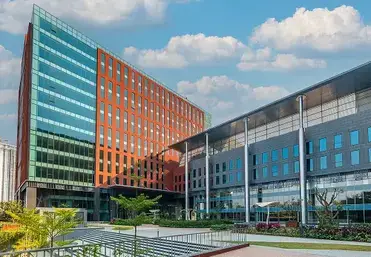
Looking for Grade A Commercial Spaces Built for Long-Term Value?
Lease or invest in future-ready developments across Bengaluru, Chennai, Hyderabad, Kochi & GIFT City.
- Grade A commercial developments
- Prime business & IT hub locations
- Lease & investment opportunities
MUST READ






Looking for something specific?
We'd be delighted to help you.
