Residential
Freehold vs Leasehold Property: Key Differences, Meaning & Which is Better
June 11, 2026
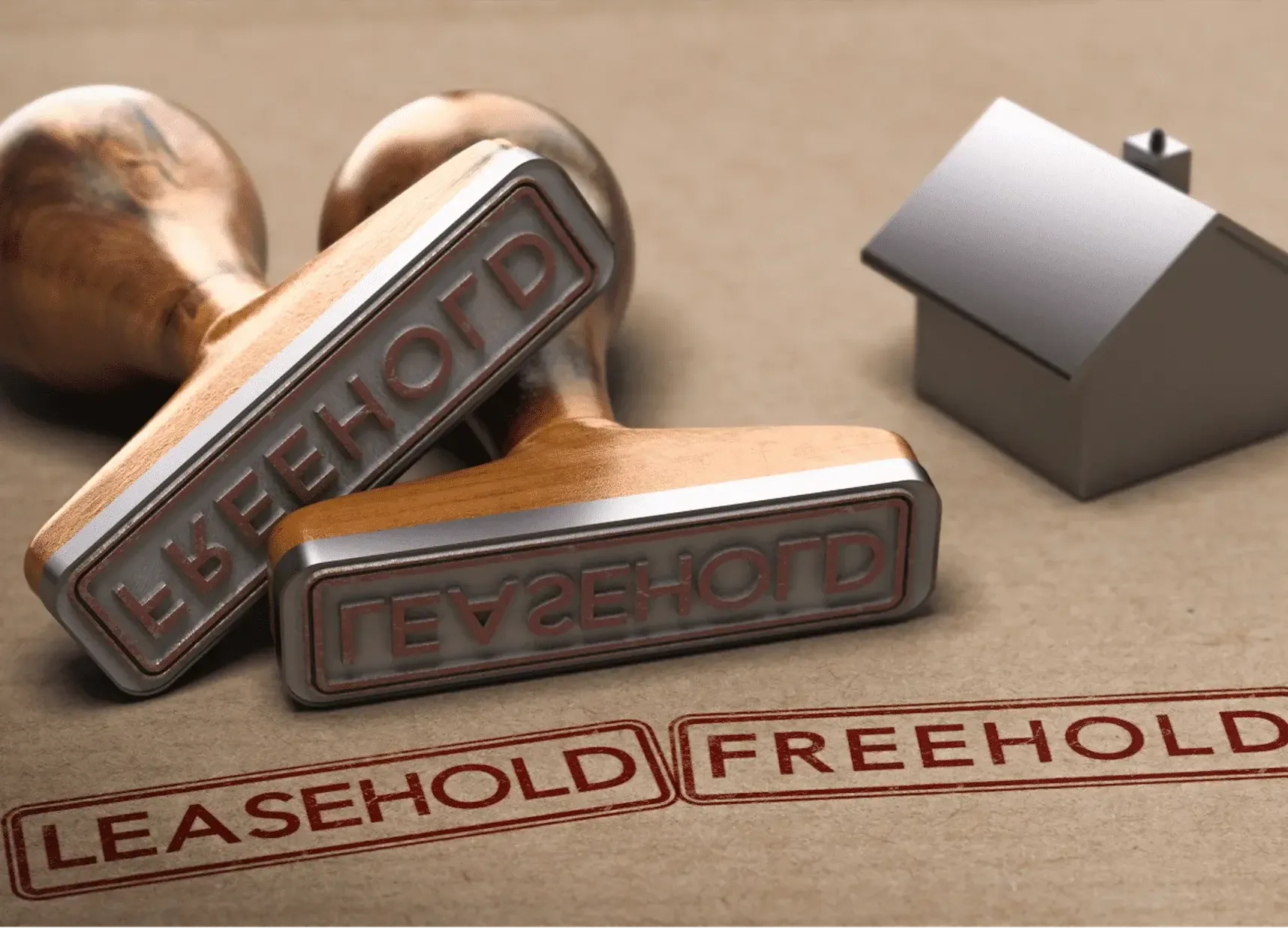
Freehold property means you own both the land and the building outright — permanently and without any time limit. Leasehold property means you own the right to use a property for a fixed period, typically 30, 60, or 99 years, while the land remains owned by a freeholder (government or private entity). In India, most private builder apartments in cities like Bengaluru, Chennai, and Hyderabad are freehold. Government-allotted housing and nazul land properties are typically leasehold.
What is Freehold Property?
A freehold property is one where the buyer owns the land and the building on it — completely and permanently. There is no time limit on this ownership. You can sell it, lease it, modify it, or pass it on to your heirs without seeking permission from anyone.
The term 'freehold' comes from the concept of 'free' ownership — meaning no feudal lord, government body, or landlord holds any superior claim over the land. In legal terms, freehold ownership is the highest and most complete form of property title.
In India, freehold ownership is the most common and most preferred form for residential property. Most private builder apartments and independent houses in cities like Bengaluru, Chennai, and Hyderabad are freehold properties.
Key Features of Freehold Property
- You own the land and the structure — no separate landowner exists
- Ownership is permanent and can be inherited by legal heirs
- No ground rent, land lease fees, or periodic renewal required
- Banks readily approve home loans on freehold properties
- You can sell, renovate, or modify the property without requiring third-party consent
What is Leasehold Property?
A leasehold property is one where the buyer owns the right to occupy or use the property for a specific number of years — but does not own the land it sits on. The land continues to belong to the freeholder, which could be a government body (such as the DDA, state government, or a housing board) or a private landlord.
The lease period is typically 30, 60, or 99 years. Once the lease expires, ownership of the property technically reverts to the freeholder — unless the lease is renewed. Leasehold properties are common in government-allotted housing schemes, cantonment areas, and some nazul land properties.
Key Features of Leasehold Property
- You own the building or apartment — not the land beneath it
- Ownership is time-limited; the lease must be renewed on expiry
- Annual ground rent and maintenance/service charges are usually payable
- Major structural changes require the freeholder's approval
- Resale value can decline significantly as the lease period shortens
TIP: If you are buying a government-allotted flat or a property in certain urban areas (like parts of Delhi, Noida, or cantonment zones), always check whether the land title is freehold or leasehold before proceeding.
Freehold vs Leasehold: Quick Comparison Table
| Feature | Freehold Property | Leasehold Property |
|---|---|---|
| Land Ownership | You own both the land and the building outright, permanently. | You own the building/apartment only. The land belongs to the freeholder (government or private entity). |
| Duration | Indefinite. Ownership is permanent and fully heritable. | Fixed term — typically 30, 60, or 99 years. Must be renewed when the lease ends. |
| Control & Alterations | Full control. You can renovate or modify without seeking anyone's permission. | Limited control. Major structural changes require the freeholder's approval. |
| Recurring Fees | No ground rent or land lease fees. | Annual ground rent and service/maintenance charges usually apply. |
| Resale Value & Home Loans | Easier to sell. Banks readily approve home loans on freehold properties. | Resale value can drop as the lease shortens. Some lenders hesitate on short leases. |
| Maintenance Responsibility | You bear full responsibility for all maintenance and repairs. | Shared responsibility — exterior and common areas are often managed by the freeholder or a management company. |
| Typical Examples in India | Most DDA-allotted flats (converted), private builder apartments in Bengaluru, Chennai, Hyderabad. | Government-allotted housing, nazul land properties, cantonment area plots. |
Key Differences Between Freehold and Leasehold Property
1. Land Ownership
This is the most fundamental difference. In a freehold property, you own the land and the structure together — permanently. In a leasehold property, you only own the structure for the duration of the lease. The land stays with the freeholder.
2. Duration of Ownership
Freehold ownership has no expiry date — it is perpetual. Leasehold ownership, by contrast, is time-bound. When a 99-year lease ends, the property technically returns to the freeholder unless the lease is formally renewed or converted to freehold.
3. Resale and Home Loan Eligibility
Freehold properties are significantly easier to sell and mortgage. Most Indian banks and housing finance companies prefer freehold properties as collateral for home loans because the title is clear and unencumbered. Leasehold properties — particularly those with fewer than 30 years remaining on the lease — can face difficulty getting home loan approvals.
4. Ground Rent and Recurring Costs
Freehold property owners do not pay any ground rent or land lease fees. Leasehold property owners typically pay annual ground rent to the freeholder, in addition to maintenance charges. These costs vary depending on the lease agreement and location.
5. Modifications and Renovations
As a freehold owner, you have full freedom to renovate, extend, or modify your property without seeking permission. Leasehold owners often need the freeholder's written consent before undertaking major structural work — adding complexity and cost.
Advantages and Disadvantages of Freehold and Leasehold
Freehold Property — Pros and Cons
- Permanent, inheritable ownership
- No ground rent or recurring land fees
- Full control over renovation and use
- Better home loan eligibility and resale value
- Easier to pass on to family as part of an estate
- Usually priced higher than leasehold equivalents
- Full maintenance responsibility rests with the owner
Leasehold Property — Pros and Cons
- Lower purchase price compared to freehold in the same area
- Common area and exterior maintenance handled by freeholder/management company
- Common in prime urban locations where land division is not possible
- Ownership is time-limited; renewal involves additional cost
- Ground rent and service charges add to holding costs
- Banks may hesitate to finance short-lease properties
- Resale value can erode as the lease nears expiry
Which is Better — Freehold or Leasehold?
For most homebuyers in India — especially those purchasing luxury apartments in Bengaluru, Chennai, or Hyderabad — freehold is the better choice for the following reasons:
- Long-term investment security: freehold properties hold and appreciate in value better over time
- Wealth transfer: freehold ownership can be passed to heirs without legal complications from a lease agreement
- Home loan ease: banks prefer freehold title for quick sanction and higher loan eligibility
- No surprise costs: no ground rent, no renewal fees, no freeholder permissions needed
Leasehold makes sense in specific situations — for instance, if the property is in a prime location (like a DDA flat in central Delhi) where freehold equivalents don't exist, or if the buyer is focused on a short-term usage horizon and the upfront cost difference is significant.
If you are an NRI considering a property purchase in India, understanding freehold ownership is especially important. Visit our NRI property buying guide for a complete overview of your rights and options.
What Happens After 99 Years of Leasehold?
When a 99-year lease expires:
- In theory, ownership of the land (and potentially the structure) reverts to the freeholder
- In practice, many lease agreements include a renewal clause — allowing the leaseholder to extend for another fixed term, usually by paying a renewal premium and legal fees
- In India, the government has in many cases offered freehold conversion to long-standing leaseholders — especially for DDA-allotted properties in Delhi and certain state government housing schemes
- For properties on nazul land, the lease renewal process must go through the relevant municipal or revenue authority
The key takeaway: a 99-year lease is not as permanent as freehold ownership. If you are buying a leasehold property, always check the remaining lease term, renewal conditions, and conversion eligibility before finalising the purchase.
Can Leasehold Property Be Converted to Freehold?
Yes, in many cases leasehold property can be converted to freehold — but the process and eligibility vary by state, city, and the originating authority of the lease.
General Conversion Process
- Apply to the relevant authority (DDA, state housing board, municipal corporation, or revenue department)
- Pay the applicable conversion charges — calculated based on circle rate and remaining lease period
- Submit the lease deed, identity documents, NOC from the housing society (if applicable), and other property documents
- The authority issues a Freehold Deed or updates the land records to reflect freehold ownership
In Bengaluru and Karnataka, property registration and land record verification through the Kaveri Online Services portal can help you check the title status of a property before or after conversion.
NOTE: The conversion fee can be significant — sometimes running into several lakhs — especially for properties in prime urban locations. Factor this into your total acquisition cost if you are buying a leasehold property with the intention to convert.
Is Freehold Property Safe to Buy?
Yes — freehold property is generally the safest form of residential property ownership in India. However, 'freehold' alone does not guarantee a clear title. You should always verify:
- The sale deed confirms freehold ownership and there are no encumbrances
- The property is registered with the relevant sub-registrar and land records are updated
- There are no pending litigation, loans, or disputes on the property
- The builder or seller has obtained all required approvals (RERA registration, occupancy certificate, building plan sanctions)
Always insist on a title search before purchasing any property. For a full legal compliance overview, read about the documents to check before buying a flat in India.
Freehold & Leasehold in India: Legal Framework
Property ownership in India is governed primarily by the Transfer of Property Act, 1882 and state-specific land laws. Key legal aspects to understand:
- Freehold title is typically transferred via a registered Sale Deed, which must be registered with the Sub-Registrar's office under the Registration Act, 1908
- Leasehold rights are transferred via a Lease Deed, which for periods exceeding one year must also be registered
- In Delhi, DDA flats were historically allotted on leasehold basis; the government periodically announces schemes to convert them to freehold
- In Karnataka (Bengaluru), most private developer properties are freehold; properties on BDA (Bangalore Development Authority) land may have specific title conditions
- For properties in cantonment areas or those involving central government land, specific laws under the Cantonments Act apply
Understanding the Transfer of Property Act can help you read and interpret the legal clauses in any sale or lease deed more confidently.
FAQ’s
1. What is the difference between freehold and leasehold property?
Freehold means permanent ownership of land and structure with no expiry. Leasehold means occupancy rights for a fixed term (30–99 years) while the land stays with the freeholder.
2. Which is better — freehold or leasehold?
Freehold is better for long-term buyers with no ground rent, easier to sell, better home loan eligibility, and stronger appreciation over time.
3. Can freehold land be taken back by the government?
Yes, under the Land Acquisition Act, the government can acquire freehold land for public purposes. The owner receives fair market value compensation.
4. What kind of properties cannot be freehold?
Properties on government land or land allotted by housing boards like BDA (Bengaluru) or CMDA (Chennai) are typically leasehold and may not be eligible for freehold ownership.
5. Can leasehold property be sold?
Yes, but the buyer takes over the remaining lease term. Properties with fewer than 30 years remaining are harder to sell and difficult to get home loans on.
6. What happens after 99 years of leasehold?
The land reverts to the freeholder. Most leases have a renewal clause. In India, governments have periodically offered freehold conversion to eligible leaseholders.
7. Why is a 99-year lease not permanent ownership?
Because the land never transfers to you it stays with the freeholder throughout. Your right to occupy ends when the lease expires unless renewed or converted.
8. Can leasehold property be converted to freehold?
Yes. You apply to the relevant authority (BDA, CMDA, or state housing board), pay the conversion charges, and submit the required documents to get a freehold deed issued.
9. What are the 4 types of property ownership in India?
(1) Freehold permanent ownership; (2) Leasehold time-limited use rights; (3) Government leasehold land allotted by BDA or CMDA on long-term lease; (4) Co-operative society housing society owns land, members hold occupancy shares.
MUST READ





Looking for something specific?
We'd be delighted to help you.
