
Residential
What to Expect from Bangalore's Real Estate Market in the Next 5 Years
May 02, 2025
Bangalore is one of India's fastest-growing real estate markets, driven by Metro Phase 2 and 3 expansion, a booming IT and GCC sector, and rising NRI demand. Key localities like Whitefield, Sarjapur Road, Devanahalli, and Yelahanka are expected to see strong property appreciation through 2030. Luxury apartments and gated communities in Bengaluru remain the top choice for both end-users and investors.
Bangalore has proved to be one of the country's most vibrant real estate markets. The city has emerged as a powerhouse of the economy, propelling the need for quality residential and commercial spaces and attracting thousands of professionals, entrepreneurs and investors.
In Bangalore, stamp duty ranges from 2% to 5% depending on property value, and registration charges are 2% of the property value (revised from 1% in August 2025). On a ₹60 lakh flat, your total statutory cost works out to approximately ₹4.35 lakh — stamp duty ₹3 lakh + registration ₹1.2 lakh + BBMP cess ₹15,000. Use the Kaveri 2.0 portal to calculate and pay online.
What Are Stamp Duty and Registration Charges in Bangalore?
When you buy a property in Bangalore, two mandatory government charges apply:
- Stamp duty — a tax on the property transaction document. Paying it makes the document legally valid and admissible in court.
- Registration charges — the fee for recording the property in the buyer's name in government land records.
Both are set by the Karnataka Government and are compulsory for all residential property and commercial property purchases across the state — Bengaluru, Mysuru, Mangaluru, and beyond.
Stamp Duty Rates in Bangalore 2025–26
Karnataka follows a slab-based stamp duty system. The rates below apply across all cities in the state, including Bengaluru:
| Property Value | Stamp Duty Rate | Effective Rate (with 0.5% BBMP Cess) |
|---|---|---|
| Below ₹20 lakh | 2% | 2.1% (BBMP) |
| ₹20 lakh – ₹45 lakh | 3% | 3.15% (BBMP) |
| Above ₹45 lakh | 5% | 5.5% (BBMP) |
BBMP Cess: If your property is within BBMP (Bruhat Bengaluru Mahanagara Palike) limits, an additional 0.5% cess is charged on the stamp duty amount — not on the property value.
These rates apply to both residential properties and commercial properties. Note: Karnataka removed the gender-based stamp duty concession for women under the Registration (Karnataka Amendment) Act 2024. Both male and female buyers now pay the same rate.
Registration Charges in Bangalore: Updated to 2% (August 2025)
Important Update: Effective 31 August 2025, Karnataka doubled its property registration charge from 1% to 2% of the property value. This was the first revision since 2003.
The registration charge is uniform — it applies at the same 2% rate across all property types and all price brackets, for all buyers regardless of gender.
| Property Value | Registration Charge (2%) |
|---|---|
| ₹30 lakh | ₹60,000 |
| ₹50 lakh | ₹1,00,000 |
| ₹60 lakh | ₹1,20,000 |
| ₹1 crore | ₹2,00,000 |
If your sale agreement was signed before 31 August 2025, confirm with your Sub-Registrar whether the older 1% rate applies to your specific transaction.
How to Calculate Stamp Duty and Registration Charges
Here is how to calculate your total cost for a property in Bangalore:
- Find the guidance value — the minimum value set by the Karnataka government for your property's location. Check it on the Kaveri 2.0 portal. Stamp duty is calculated on whichever is higher: the guidance value or the actual sale price. You can also check it via the guidance value blog.
- Calculate stamp duty — apply the rate (2%, 3%, or 5%) based on your property value.
- Add BBMP cess — if within BBMP limits, add 0.5% of the stamp duty amount.
- Add registration charges — 2% of the property value.
Example — ₹60 lakh apartment (above ₹45 lakh slab):
| Cost Component | Amount |
|---|---|
| Stamp Duty (5% × ₹60 lakh) | ₹3,00,000 |
| BBMP Cess (0.5% of ₹3 lakh) | ₹15,000 |
| Registration (2% × ₹60 lakh) | ₹1,20,000 |
| Total Statutory Cost | ₹4,35,000 |
The government calculates both stamp duty and registration charges on the higher of the sale price or the guidance value. Always verify the guidance value on Kaveri 2.0 before budgeting.
How to Pay Stamp Duty Online Using Kaveri 2.0
Karnataka upgraded its property registration portal to Kaveri 2.0. As of January 2026, the state also introduced digital e-stamping under the Karnataka Stamp (Digital e-Stamp) Rules, 2025 — buyers can now generate stamp certificates entirely online without visiting a bank.
Step-by-step:
- Visit kaveri.karnataka.gov.in
- Register or log in to your account
- Select 'Stamp Duty Payment' from the services menu
- Enter property details — location, type, and market value
- Use the built-in calculator to confirm your stamp duty and registration charges
- Pay online via net banking, debit card, or UPI
- Download your digital e-stamp certificate with a unique QR code for verification
You can also book your Sub-Registrar Office appointment online through the same portal — no need to visit in person for pre-registration steps.
Planning to buy a luxury apartment in Bengaluru? Explore Brigade Group's residential projects in Bengaluru and our team can walk you through the full cost-of-ownership picture, including stamp duty and home loan structuring.
Stamp Duty Exemptions in Karnataka: Who Qualifies?
Karnataka currently does not offer a blanket gender-based stamp duty concession. The 1% discount for women buyers was discontinued under the Registration (Karnataka Amendment) Act 2024.
Exemptions or concessions may still apply in these cases:
- Properties under ₹20 lakh attract a lower 2% rate, benefiting entry-level buyers
- Agricultural land transferred within the family may attract lower rates
- Properties under specific government housing schemes may have reduced stamp duty
- MSME and senior citizen concessions apply for select scheme-linked properties — confirm with your Sub-Registrar
Always verify your eligibility with a legal professional or the Karnataka Department of Stamps and Registration before finalising your purchase.
Stamp Duty vs Registration Charges: Key Differences
Both charges are compulsory and paid at the time of property registration. Here is how they differ:
| Feature | Stamp Duty | Registration Charges |
|---|---|---|
| What it is | Tax on the property transaction | Fee to officially record ownership |
| Rate | 2%–5% (slab-based on property value) | 2% flat (all property types) |
| Purpose | Makes the document legally valid | Creates public record of ownership |
| Paid to | Karnataka State Government | Sub-Registrar of Assurances |
| Calculated on | Higher of sale value or guidance value | Higher of sale value or guidance value |
Bangalore has proved to be one of the country's most vibrant real estate markets. The city has emerged as a powerhouse of the economy, propelling the need for quality residential and commercial spaces and attracting thousands of professionals, entrepreneurs and investors.
As we progress through the next five years (2025–2030), the industry is expected to grow tremendously due to fast-paced urbanisation, large-scale infrastructure projects and government policies that offer a transparent and investor-friendly ecosystem. India's real estate sector is projected to hit approximately $1 trillion by 2030, growing at 11–13% CAGR, with Bangalore leading the charge in residential demand.
The future of real estate in Bangalore looks promising, driven by strong IT and GCC expansion, increased NRI investment, and evolving preferences for sustainable and tech-enabled housing. The Bangalore real estate market outlook 2026 shows strong signals — both end-users and investors are entering the market early to maximise returns.
Overview of Bangalore’s Current Real Estate Market
Bangalore's current real estate market has shown remarkable resilience, making it a preferred destination for homebuyers and investors. The city is experiencing growth across residential, commercial, retail and hospitality segments.
The Bangalore real estate growth rate has been steady even during global financial cycles. The robust provision of employment opportunities — especially from the IT, startup, and Global Capability Centre (GCC) ecosystem — along with higher migration and infrastructure development, continue to drive demand in the Bengaluru residential property market.
Some of the finest performing sectors include:
Residential Sector
Demand for luxury, mid-segment and integrated township housing has been strong, with projects featuring smart home technology, gated communities and sustainable design.
Commercial Sector
Being a major IT and GCC hub, Bangalore has seen the highest demand for Grade 'A' offices, co-working spaces and business parks.
Retail Sector
The retail landscape is evolving with shopping malls, high-street retail and mixed-use developments combining commercial and residential uses.
Hospitality Sector
The city's growing business and tourism activity has triggered investments in elegant hotels, serviced residences and premium accommodations.
Key Trends Shaping Bangalore's Real Estate Market (2025–2030)
The next five years will be transformative for Bangalore's real estate sector. Here are the major trends defining the market:
Urbanisation and Population Growth
The city is rapidly expanding its workforce. Demand for residential properties in Bengaluru is surging, particularly in IT-centric corridors and developing localities.
Government Policies and RERA Compliance
Reforms like RERA (Real Estate Regulation and Development Act) and PMAY ensure improved transparency and buyer confidence. RERA compliance is now a key deciding factor for homebuyers evaluating developers.
Infrastructure Development
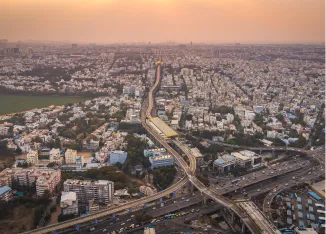
Metro Phase 2 and 3, the Peripheral Ring Road (PRR), Satellite Town Ring Road (STRR), and elevated highway upgrades are all in active development. These projects directly improve connectivity and raise property values in impacted corridors.
NRI Demand and FDI Inflows
NRI participation in Bangalore's luxury housing segment has risen significantly. A strong dollar-rupee exchange rate and India's growth story continue to attract overseas buyers. NRI investors exploring Bengaluru real estate are particularly drawn to premium, RERA-compliant projects with high appreciation potential.
Technological Innovations
PropTech, Smart City initiatives and digital real estate platforms are transforming property transactions and home-buying journeys through virtual tours, AI-assisted pricing, and online document management.
Key Drivers of Bangalore's Residential Real Estate Growth
Metro Expansion and Road Connectivity
Metro Phase 2 and 3, the Peripheral Ring Road, and the Satellite Town Ring Road will dramatically improve accessibility across the city, directly boosting real estate demand in corridors like Whitefield, Sarjapur Road, and Devanahalli.
IT and GCC Sector Boom
Bangalore's position as India's IT capital and a growing GCC hub continues to drive sustained housing demand in Whitefield, Electronic City and the Outer Ring Road corridor. Global technology companies setting up large GCC operations are creating thousands of high-income jobs — directly fuelling luxury residential demand.
Migration and Urbanisation
A growing population, fuelled by employment opportunities, is boosting real estate in emerging localities. This migration continues to create strong end-user demand for quality homes.
Luxury and Gated Communities
An increasing preference for luxury apartments in Bengaluru with premium amenities, larger floor plates, and integrated township features is shaping new developments across the city.
Property Appreciation and Investment Returns
Bangalore real estate appreciation in top micro-markets has been strong and consistent. For investors asking "what is the expected appreciation rate of property in this area", the answer depends on infrastructure delivery — but the trend is consistently upward.
Emerging Trends in Bangalore's Residential Real Estate
Integrated Townships
Self-sufficient communities combining residential, commercial and retail spaces are in high demand. These townships offer convenience, security and long-term lifestyle value.
Smart Homes and Sustainable Living
Energy-efficient homes with smart automation, solar panels, rainwater harvesting and green certifications are gaining rapid popularity among Bangalore homebuyers.
Rental and Co-living Spaces
Young professionals and students continue to drive demand for rental and co-living properties near tech parks — an opportunity for investors seeking rental yield.
Property Price Trends
Bangalore property price trends show steady appreciation across most micro-markets. Flat prices in premium corridors have risen 15–20% over the last two years, and experts predict continued upward momentum through 2030, driven by infrastructure completions and rising income levels. Whether you are tracking Bangalore real estate market trends 2026 or planning for 2030, the data consistently points to capital appreciation.
Top Residential Localities for Investment in Bangalore
Whitefield and Sarjapur Road
High appreciation potential due to IT presence and Metro Phase 3 connectivity. View Brigade's residential projects in Bengaluru in these corridors.
North Bangalore — Devanahalli and Yelahanka
Proximity to Kempegowda International Airport (KIAL), the upcoming aerospace SEZ, and STRR make North Bangalore an investment hotspot. Brigade Insignia in Yelahanka is one example of a premium project in this growth corridor.
Electronic City and Outer Ring Road
Enhanced metro connectivity and rising employment at major tech campuses continue to fuel demand in these established IT corridors.
Kanakapura Road and Hosur Road
Upcoming infrastructure projects and more accessible price points make these corridors attractive for long-term investment.
Hebbal and Thanisandra
Luxury residential demand, strong ORR connectivity, and premium developer projects make Hebbal and Thanisandra high-value investment destinations.
Potential Challenges in Bangalore's Residential Market
No market is without risk. Here are the key challenges buyers and investors should factor in:
- Traffic Congestion: Growing vehicular traffic is a primary concern. Metro expansion will help, but some corridors will remain congested until Phase 3 is complete.
- Rising Property Prices: Affordability is under pressure in prime localities. Buyers are increasingly looking at emerging corridors for better entry points.
- Supply vs. Demand Imbalance: High demand in select locations could lead to inventory shortages and faster price escalation.
- Regulatory Approvals: Delays in project approvals and compliance timelines can impact delivery schedules — always verify RERA registration before booking.
- Real Estate Bubble Risk: Some analysts flag a micro-bubble risk in Bangalore in certain over-heated micro-markets. Stick to RERA-compliant projects from reputed developers to manage this risk.
The Role of Technology in Shaping Residential Real Estate
AI and Big Data
Advanced analytics are helping buyers make informed investment choices — from price trend forecasting to neighbourhood-level demand analysis.
Virtual Home Tours and Digital Transactions
Technology is simplifying the home-buying process for both local buyers and NRIs, enabling complete transactions without physical visits.
Smart Infrastructure
IoT-enabled security systems, energy-efficient designs and smart home automation are transforming gated communities and integrated townships across Bangalore.
Investment Opportunities: What Homebuyers and Investors Should Consider
Bangalore real estate market trends suggest the 2025–2030 window is an excellent entry point. With multiple infrastructure projects nearing completion and commercial hubs expanding, property values are expected to appreciate significantly.
Best Time to Invest — Is Now a Good Time to Buy in Bangalore?
If you have been asking "is it a good time to invest in real estate in Bangalore" — the answer for most buyers and investors is yes, particularly in the pre-launch or under-construction stage. Prices typically rise 15–25% from launch to possession, making early entry more rewarding. Investors looking for high returns should consider emerging localities before prices reach saturation.
Short-term vs. Long-term Gains
Short-term Investments (1–3 Years)
Sarjapur Road, Thanisandra and Electronic City offer quick capital appreciation due to upcoming metro connectivity and IT park expansions.
Long-term Investments (5–10 Years)
Localities like Devanahalli, Yelahanka and Kanakapura Road promise substantial growth, given their proximity to infrastructure projects and planned commercial developments.
Key Factors to Consider Before Buying a Home in Bangalore
- Location and Connectivity: Properties near metro stations, IT hubs and major highways yield better returns.
- Developer Reputation and RERA Compliance: Always opt for projects from RERA-registered, reputed developers.
- Market Trends and Appreciation Potential: Study Bangalore real estate market trends 2026 and 2027 price forecasts before deciding.
- Return on Investment (ROI): Evaluate rental yield and long-term appreciation together — not just headline prices.
Bangalore Real Estate vs Other Indian Cities: Where Does It Stand?
- Employment base: Bangalore has the strongest tech employment ecosystem, directly driving residential demand.
- Appreciation: Returns in Bangalore's premium micro-markets are comparable to Hyderabad and higher than most Chennai localities.
- NRI appeal: Bangalore ranks highest for NRI residential investment due to familiarity with the tech ecosystem and strong rental demand.
- Luxury segment: Demand for luxury apartments in Bengaluru has outpaced supply in top corridors, keeping prices firm.
If you are exploring luxury apartments in Chennai or premium projects in Hyderabad, both cities offer strong fundamentals. But for pure capital appreciation combined with rental yield, Bangalore remains the benchmark.
Conclusion
The future of real estate in Bangalore is defined by strong economic fundamentals, massive infrastructure investment, and evolving buyer preferences. With Metro Phase 2 and 3, the PRR, STRR, and smart city projects progressing, the Bangalore real estate market outlook through 2030 remains firmly positive.
Investors and homebuyers who enter the market at the right time — especially in pre-launch stages in growth corridors — can expect substantial capital appreciation. Bangalore real estate trends indicate rising demand for residential and luxury properties will continue, making this one of India's most compelling investment destinations.
Challenges like traffic, rising prices, and regulatory delays exist, but they are manageable with the right developer and the right location. Whether you are an end-user, an investor, or an NRI exploring opportunities, Brigade Group's residential portfolio in Bengaluru offers a range of RERA-compliant, carefully designed homes in the city's most promising corridors.
FAQs
1. What is the real estate market prediction for Bangalore in 2026?
Bangalore's real estate market in 2026 is expected to see continued appreciation, especially in North Bangalore (Devanahalli, Yelahanka), Whitefield, and Sarjapur Road. Demand is being driven by metro expansion, IT and GCC sector growth, and strong NRI participation. The market is on track toward India's broader $1 trillion real estate target by 2030.
2. Which areas in Bangalore will see the highest property appreciation by 2030?
Areas with the highest property appreciation potential by 2030 include Devanahalli (proximity to KIAL and upcoming aerospace SEZ), Sarjapur Road (IT corridor and Metro Phase 3), Yelahanka (STRR and commercial expansion), and Hebbal–Thanisandra (luxury residential demand and ORR upgrades). These localities currently offer the best combination of early-stage pricing and future growth infrastructure.
3. Is Bangalore real estate a good investment in 2025–2030?
Yes. Bangalore is one of India's top real estate investment destinations for 2025–2030. The city benefits from strong IT and GCC employment, large-scale infrastructure projects (Metro Phase 2 and 3, PRR, STRR), rising NRI participation, and consistent demand for luxury apartments and gated communities. Both end-users and investors are seeing strong returns.
4. What is the expected property appreciation rate in Bangalore?
Property appreciation in Bangalore has been consistently strong in premium micro-markets. Localities like Devanahalli and Whitefield are expected to deliver significant cumulative appreciation over a 5-year horizon (2025–2030), depending on infrastructure delivery timelines and market conditions.
5. What is the current state of Bangalore's real estate market?
Bangalore's real estate market is strong across residential, commercial, retail, and hospitality segments. The city continues to attract IT professionals, entrepreneurs, and NRI investors. Luxury apartments, gated communities, and integrated townships are in high demand, particularly in North Bangalore, Whitefield, and Sarjapur Road.
6. Which factors will drive real estate growth in Bangalore over the next five years?
Key drivers include: Metro Phase 2 and 3 expansion improving connectivity across the city; the IT and GCC sector creating sustained housing demand; rising population from urban migration; government initiatives like RERA improving transparency; NRI investment fuelled by a strong dollar; and growing preference for luxury and sustainable homes.
7. What are the emerging trends in Bangalore's residential real estate?
Key trends include: integrated townships with live-work-play setups; smart and energy-efficient homes with automation and green features; growing demand for co-living spaces near IT parks; luxury gated communities; and strong NRI demand for high-value apartments in metro-connected locations.
8. Which localities in Bangalore are best for investment?
Top investment localities are: Whitefield and Sarjapur Road (strong IT presence, Metro Phase 3); North Bangalore — Devanahalli and Yelahanka (airport proximity, aerospace SEZ); Electronic City and Outer Ring Road (employment hubs and metro access); and Hebbal–Thanisandra (luxury residential demand).
9. Should investors focus on short-term or long-term gains in Bangalore?
Short-term (1–3 years): Sarjapur Road, Thanisandra, and Electronic City offer quick appreciation due to upcoming metro connectivity and IT expansion. Long-term (5–10 years): Devanahalli, Yelahanka, and Kanakapura Road offer higher cumulative returns as infrastructure projects complete and commercial zones mature.
10. What is the 80/20 rule in property investment?
The 80/20 rule in property investment means 80% of your returns typically come from 20% of your investment decisions — usually the choice of location and the timing of purchase. In Bangalore's context, this means focusing on high-growth micro-markets like Devanahalli or Sarjapur Road rather than spreading investment across multiple average locations. Getting the location right is the single biggest driver of real estate returns.
MUST READ




Looking for something specific?
We'd be delighted to help you.
