
Commercial
Inclusive Workspaces: Built as Ecosystems for Accessibility, Well-being and Work-Life Balance
March 27, 2026
The Rise of Inclusive Workplace Ecosystems
According to the 2011 Census, India recorded 2.86 million people with disabilities. Yet most companies have less than 1% of PwD representation. Most workspaces just weren't built for everyone. Lack of DEI-driven workplace design is a failure of execution, not intention. As hybrid work stays, companies need to replace standalone blocks for mixed-use spaces that actually cater to everyone’s needs. It isn't just about adding ramps to the stairs. It’s about prioritising mental health and building a real, inclusive workspace.
Increasing stress levels in urban areas are prompting companies to trade closed doors for shared spaces where workers can actually breathe and connect. This shift improves mental health among employees. New buildings must incorporate design features that make every individual feel they belong.
This blog helps define an inclusive workspace, universal design standards of such spaces and common mistakes to avoid when building one.
What is an Inclusive Workspace?
An inclusive workplace is not defined by an office space alone. It is an ecosystem of shared spaces where every person feels welcomed, regardless of their diverse background. Individual identities and abilities are celebrated, not excluded. Intentionally designed spaces help provide equitable access to opportunities,thereby removing barriers to participation and creating an equitable environment.
Inclusive Workspace vs Accessible Workspace vs Universal Design
Inclusive office environments support diverse abilities, disabilities, backgrounds, neurodiversity and working styles. It strives to ensure that all employees feel a sense of belonging and perform their best. Smart layout becomes embedded in the architecture itself, encouraging wellness that drives attendance and reduces turnover.
An accessible workplace focuses on removing the physical, digital and sensory barriers for people with disabilities. This design approach was developed to make public spaces accessible to the disabled community. Accessible office designs can take many forms. This can include wheelchair-accessible washrooms, Braille signage and high-contrast monitors that serve diverse accessibility needs.
Universal design is about creating environments that serve every individual. It provides equitable workspace access, and is designed to be accessed, understood and used by everyone. These helpful designs could be in the form of ramped footpaths for wheelchairs and cycles, door handles for those unable to grip a doorknob and height-adjustable workstations for people of all sizes.
Creating a modern, high-performing ecosystem requires a holistic approach that integrates all three. It extends these principles beyond the office spaces and into retail, transit, housing, healthcare and public spaces.
Universal Design Standards That Enable Inclusive Ecosystems
1. Universal Design Principles (Applied Beyond Offices)
Universal design has seven principles that were created by a group of architects, product designers, engineers and environmental design researchers. These principles apply to all environments and must be included in office layouts, retail zones, transportation access zones and other common amenities.
These are the seven principles of universal design in the workplace:
- Equitable use: The space must be usable by people of all abilities or disabilities.
- Flexibility in use: The design must accommodate different individuals and their preferences.
- Simple and intuitive use: The design should be easy to use and understand by everyone.
- Perceptible information: All the required information must be adequately conveyed through the design.
- Tolerance for error: The design has to reduce potential risks and the consequences from unintended actions must be minimal.
- Low physical effort: Users should be able to use the design without fatigue.
- Size and space for approach and use: The design must be appropriate for use by people of all sizes, mobility and postures.
2. Certifications That Support Inclusive Ecosystems
ISO certifications are globally recognised credentials that prove that a company complies with the international standards for quality, safety and efficiency. These certificates are enablers of holistic inclusion in the workplace.
- ISO 9001: Signifies adherence to international quality management standards with consistent service delivery across the workspace and shared amenities.
- ISO 14001: Demonstrates implementation of international environmental sustainability standards for measuring, managing and reducing environmental impact.
- ISO 45001: Reinforces occupational health, safety and psychological comfort through proactive risk management and well-being protocols.
3. India’s Harmonised Accessibility Guidelines
The Harmonised Guidelines and Standards for Universal Accessibility in India, 2021, published by the Government of India, articulates a shared vision of a universally accessible and inclusive India. The document lays out a set of workplace accessibility guidelines for sensitising and guiding the stakeholders responsible for designing, planning and implementing accessibility in built environments. It provides a holistic understanding of universal design philosophy in the Indian context, serving as a baseline for inclusive urban workspace ecosystems.
Core Elements of an Inclusive Workspace Ecosystem
1. Barrier-Free Physical Accessibility (Across the Campus)
Inclusive workspace design serves every person. Accessibility isn't just about the office door. Entire campuses must be clear of barriers so wheelchairs and walkers actually move freely. Barrier-free designs are about independence, not just compliance. Design for people, not layouts; it helps people with mobility needs navigate the campus independently.
2. Inclusive Workspaces and Flexible Layouts
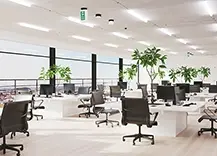
The ergonomic workspace layouts are designed to be flexible and adaptable. The height-adjustable desks, ergonomic chairs, flexible seating layouts and customisable workstations give employees of all physical abilities the option to adjust their workspace according to their comfort. The quiet zones, break areas and collaborative spaces provide an ideal environment for different working styles.
3. Integrated Mobility and Commute Ease
Comprehensive mobility infrastructure supports ease of commuting, both on campus and off. By providing transport links, walking access to the metro station, ample parking spaces, provision for cyclists and electric vehicle charging stations, every employee can commute easily, regardless of their preferred mode of transport.
4. Wellness, Recreation and Daily-Life Amenities
Holistic employee well-being requires integrated amenities supporting both professional and personal needs. On-campus wellness rooms, recreational facilities, gyms, cafes and outdoor spaces foster community. Childcare services, convenience stores and dining options enable employees to maintain a healthy work-life balance without leaving campus.
5. Lighting, Acoustics and Sensory Comfort
Sensory comfort creates productive environments for all employees. Adjustable, glare-free lighting accommodates varying visual needs and sensory sensitivities. Acoustic comfort treatments reduce noise pollution, supporting focus for neurodivergent employees and creating conducive work environments across the campus.
6. Technology and Digital Accessibility
State-of-the-art technology infrastructure must support comprehensive accessibility features. Screen readers, voice recognition software and alternative input devices ensure digital platforms remain fully accessible, enabling employees of all abilities to interact effectively with workplace technology.
7. Safety, Wayfinding and Emergency Design
Clear wayfinding and safety features are a cornerstone of universal accessibility principles. Wayfinding and signage boards in large print, high contrast and Braille enable independent navigation. Emergency routes, evacuation plans, wide corridors and identifiable exits accommodate employees with mobility or sensory impairments, ensuring safety for all.
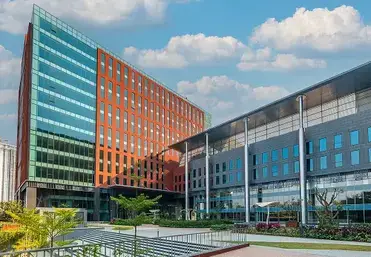
Brigade Gateway demonstrates these principles in practice, integrating barrier-free design, flexible workspaces, comprehensive mobility infrastructure, holistic amenities, sensory-optimised environments, accessible technology and universal safety systems across its 40-acre campus, creating an inclusive, ecosystem-based workplace design.
Why Ecosystem-Based Inclusion Improves Work-Life Balance
Reduced Commute Stress
Strategic location and multimodal transport infrastructure reduce commute times and associated stress. Metro connectivity, cycling provisions, ample parking and electric vehicle charging enable employees to choose transport modes matching their lifestyle and accessibility needs, ensuring they arrive energised rather than exhausted, which directly supports higher productivity and contributes to better employee well-being, helping them maintain focus and performance throughout the day.
Seamless Transition Between Work, Errands and Leisure
Integrated ecosystems eliminate the fragmented urban experience of travelling between work, shopping and recreation. On-site retail, dining, fitness centres and wellness rooms allow employees to manage errands and enjoy leisure activities without leaving campus, reclaiming time typically lost to transit between locations. By streamlining daily activities, this approach enhances employee well-being, promotes work-life balance, and drives higher productivity by reducing time lost to commuting and stress.
Better Physical and Mental Health
Accessible wellness infrastructure supports employee well-being by providing on-campus gyms, outdoor spaces, wellness rooms, and recreational facilities that promote physical activity and mental restoration. These resources reduce stress, anxiety, and burnout without requiring additional commute time or schedule coordination, ensuring employees maintain their health and mental clarity while remaining productive throughout the workday.
Stronger Sense of Belonging
Inclusive design fosters a genuine community by offering collaborative spaces, quiet zones, and amenities that accommodate all abilities. This creates an environment where employees feel valued and supported. Community-building events and wellness activities strengthen team connections, foster mutual respect across diverse workforces, and enhance talent attraction. This inclusive approach aligns with ESG values, promoting diversity, equity, and inclusion, making the company more appealing to top talent seeking an inclusive and supportive workplace.
Higher Daily Productivity
Accessible workspaces integrated with comprehensive amenities enable sustained focus and energy. When employees can address both professional and personal needs within the same environment, they avoid the productivity drain of fragmented schedules. This leads to higher productivity, as employees can maintain performance and energy levels throughout the day, ultimately benefiting the organisation’s overall success.
Brigade Gateway offers an ecosystem designed to support productivity, well-being, and growth. With a prime location, seamless integration of work, leisure, and wellness, and a commitment to inclusivity, we create a space where employees thrive both professionally and personally. Our design fosters work-life balance, attracts top talent, and aligns with ESG and compliance standards, helping your business reach its full potential. Brigade Gateway is not just a workplace, but a thriving environment built on well-being and sustainable growth.
Common Mistakes Companies Make
- Treating accessibility as an add-on: Accessibility should not be an afterthought. Mistaking accessibility as an add-on results in ineffective solutions that fail to integrate with the overall design.
- Treating inclusion as an office-only feature: Accessibility and inclusion should extend beyond the office desk. The commute to and from the workplace and the campus-wide spaces should consider the employee’s experience.
- Ignoring commute and daily-life stress: Neglecting to address the stress of long daily commutes and everyday pressures can impact employee well-being.
- Narrow passages and poor layout design: Narrow passages, hallways and doors can be a mobility challenge for people of different sizes, those in wheelchairs or those using mobility aids.
- Designing amenities without accessibility: Common amenities like break areas, cafeterias and washroom facilities should be accessible, usable and comfortable to use by everyone.
- Overlooking digital accessibility: Failing to provide digital accessibility tools to cater to employees with different needs can result in alienation or exclusion, preventing them from fully engaging with the technology.
- Overlooking neurodiversity and sensory comfort: Neglecting the needs of neurodivergent employees, such as quiet spaces, adaptable lighting and flexible design elements that reduce sensory overload, can lead them to lose focus.
- Poor emergency planning across shared spaces: Workspaces that are designed with inaccessible emergency exits that lack proper inclusive wayfinding systems, signage and staircases create confusion and a safety risk.
How to Build an Inclusive Workspace: Step-by-Step Framework
1. Audit the Entire Employee Journey
Look at where your office fails. Don't just check the floor plan—find the digital and cultural walls that block your team. If your space doesn't meet basic standards, it’s usually because you missed the human gaps.
2. Assess Accessibility Across All Shared Spaces
Evaluate shared spaces. From bathroom to breakout zones, ensure every space is accessible and inclusive. If a wheelchair can’t turn or if a room isn’t actually quiet, people can be excluded from participating. It isn't just a floor plan; it's an experience. Make it work for everyone.
3. Improve Circulation and Mobility
Re-plan the accessible circulation paths across the workspace. Prioritise wider corridors, ramps for wheelchairs and clear wayfinding and signage standards to help all employees navigate easily.
4. Integrate Wellness and Lifestyle Amenities
Wellness rooms and gyms should be part of the floor plan, not an afterthought. People need a place to actually unplug and reset during the day. If it’s hard to find, nobody uses it. Put it where people can access it easily.
5. Upgrade Technology and Digital Access
Invest in digital tools that support accessibility and sensory-friendly needs to minimise distractions. Assistive technology such as screen readers, voice recognition software and alternate devices allows technology to cater to everyone equally.
6. Train Teams on Inclusive Culture
Educate all your employees about inclusive workspace practices. This creates a supportive culture where everyone's needs are met and accommodated respectfully.
7. Continuously Evaluate and Adapt
Conduct accessibility audits, meetings and surveys regularly to understand the feedback from the employees and identify the barriers and make adjustments accordingly.
Inclusive Workspaces Are the Future of Work
Combining accessibility, universal design and human-centred design principles achieves true inclusivity. Businesses must create environments that support all employees to build a positive workplace culture. Companies that invest in inclusive offices not only meet legal requirements but also enhance employee engagement, innovation and retention. Ultimately, inclusive workspaces position organisations as forward-thinking leaders in accessibility.
Source
https://timesofindia.indiatimes.com/education/careers/news/india-talks-diversity-but-most-companies-employ-less-than-1-people-with-disabilities/articleshow/126464169.cms
https://abilitynet.org.uk/news-blogs/seven-principles-universal-design
https://niua.in/intranet/sites/default/files/2262.pdf
Looking for Grade A Commercial Spaces Built for Long-Term Value?
Lease or invest in future-ready developments across Bengaluru, Chennai, Hyderabad, Kochi & GIFT City.
- Grade A commercial developments
- Prime business & IT hub locations
- Lease & investment opportunities
MUST READ





Looking for something specific?
We'd be delighted to help you.
